
Glass blocks the wavelengths a thermal camera uses
Every warm object emits long-wave infrared radiation. A thermal camera forms its image from that radiation, in the 8 to 14 μm band. Automotive glass is transparent to visible light but absorbs long-wave infrared. Put a thermal camera behind the windshield and it measures the temperature of the glass, not the road.
This is the most common installation mistake buyers ask about, and the reason every automotive thermal night vision system, from factory-fit systems to aftermarket kits, puts the camera outside.
Where the camera goes instead
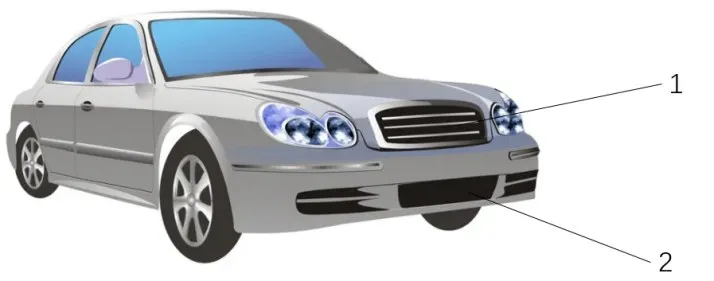
On our systems the camera sits in the front grille. The preferred position is the upper part of the grille (area 1 below). If that opening is too small or fully closed, as on some electric vehicles, use the lower bumper opening (area 2). The camera should be as close to the centre line as the grille allows and level with the ground.
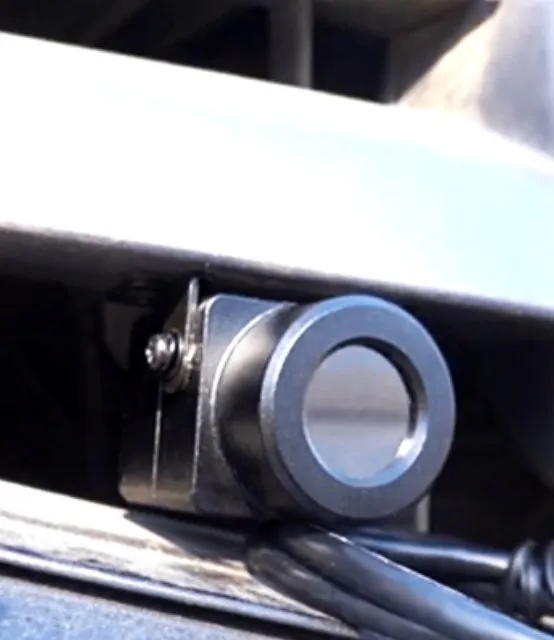
A protective window covers the lens, and the camera is rated IP67. Some configurations heat the window automatically when it drops below 2 °C and switch off above 7 °C, so frost does not blind it.
Getting the image into the cabin
A 5 m automotive cable runs from the grille through the engine bay, following the factory harness, into the cabin through the A-pillar. Inside, it connects to the display host, which takes power from the cigarette-lighter socket. The installation guide covers each step.
What about "night vision" dash cams?
Dash cams sold as night vision are low-light visible cameras, sometimes with infrared LEDs. They work through the windshield because they use visible and near-infrared light. They record what your headlights reach; they do not detect a person by body heat beyond the beam. The comparison guide explains the differences.